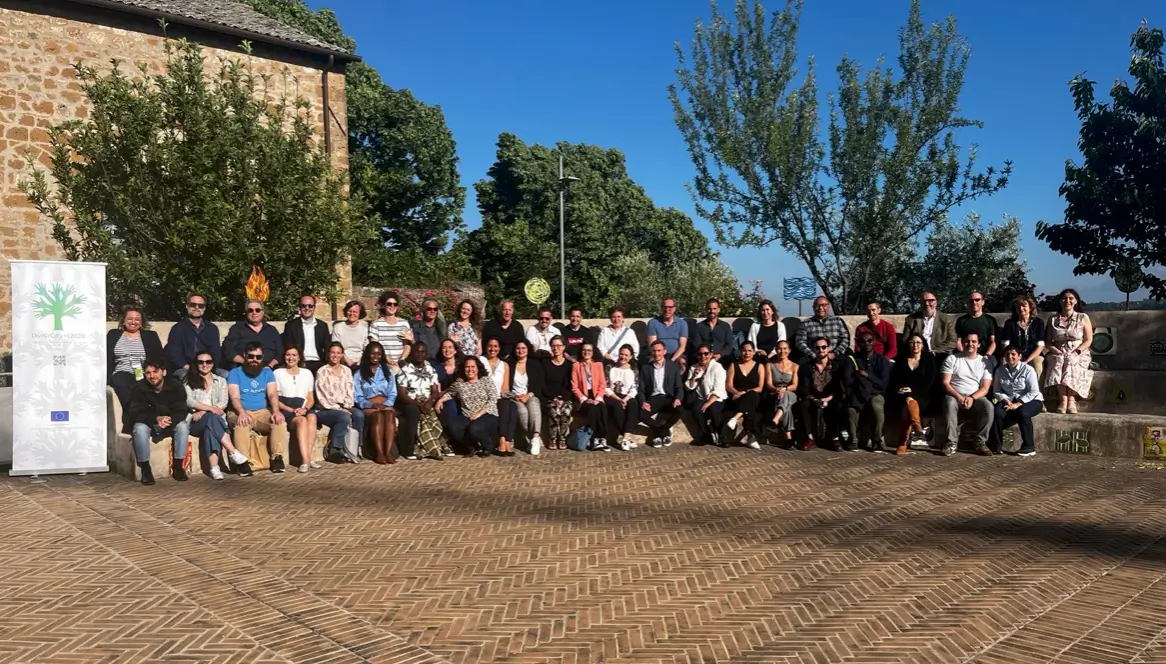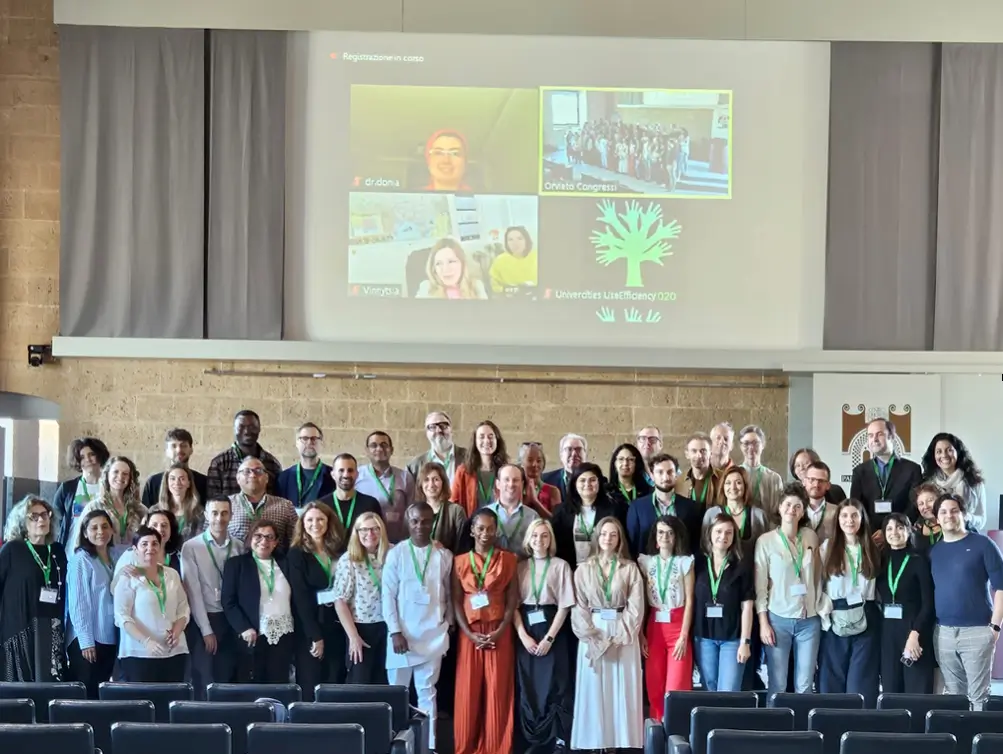
The opening event of the DivAirCity Twinning Programme was held in Orvieto, Italy, marking the official launch of the City-to-City activities. The event brought together representatives from 25 cities across five continents to foster collaboration and share innovative solutions for urban sustainability and climate resilience. The event took place in two separate days. The first day served as an informal networking session, where the DivAirCity project was introduced, and each Twin City had the chance to present who they are to the entire DivAirCity consortium. The second day instead marked the official opening, featuring collaborative roundtables where DivAirCity pilot cities and their matched Twins discussed their experience, challenges, and solutions in three topics: Nature-Based Solutions (NbS), Inclusive Co-Creation, and Urban Data Management.
The event was held in a hybrid mode, allowing representatives of cities who could not join in-person due to logistic issues to meaningfully participate to the discussions. Key outcomes included identifying unique challenges in deploying NbS, strategies for effective co-creation, and best practices for urban data management.
Main points of discussion:
- Challenges in deploying NBS: Each country faces unique challenges when deploying NBS, including lack of skills among constructors and/or in the municipality, funding for maintenance, public procurement limitations, connectivity of green spaces, balance between green areas and vehicular traffic.
- Co-creation and citizens’ engagement: challenges include the fact that projects between citizens and public institutions often struggle to move beyond the consultation stage. Common barriers include policy constraints, budget regulations, stakeholder interests, and the need for direct interaction between decision-makers and idea generator. Engaging citizens faces hurdles as people juggle jobs, education, and personal lives. Participation often requires voluntary involvement during spare time. Long project timelines can deter engagement. Interim results can help maintain interest by showing progress and relevance. Identifying key stakeholders who influence the community is crucial, as residents may not always trust or listen to municipal authorities. Co-creation is vital for making projects sustainable after initial funding stops. Finding an engaging angle for residents, which might not always be NBS-related at first, is critical for success.
- Data Gaps and Data Management: Addressing data management is complex, especially in projects involving vulnerable groups and air quality. Effective data management requires structuring data and ensuring municipal experts or collaborations with universities are in place. A focus on specific needs (e.g., combining climate and health data) and reverse-engineering from problems to data collection is recommended.
Main Lessons Learnt:
- Face-to-face interactions are crucial for building trust and strong partnerships.
- Diverse perspectives and experiences contribute to richer discussions and more comprehensive solutions.
- A hybrid approach, combining online and physical events, maximizes engagement and ensures inclusivity.