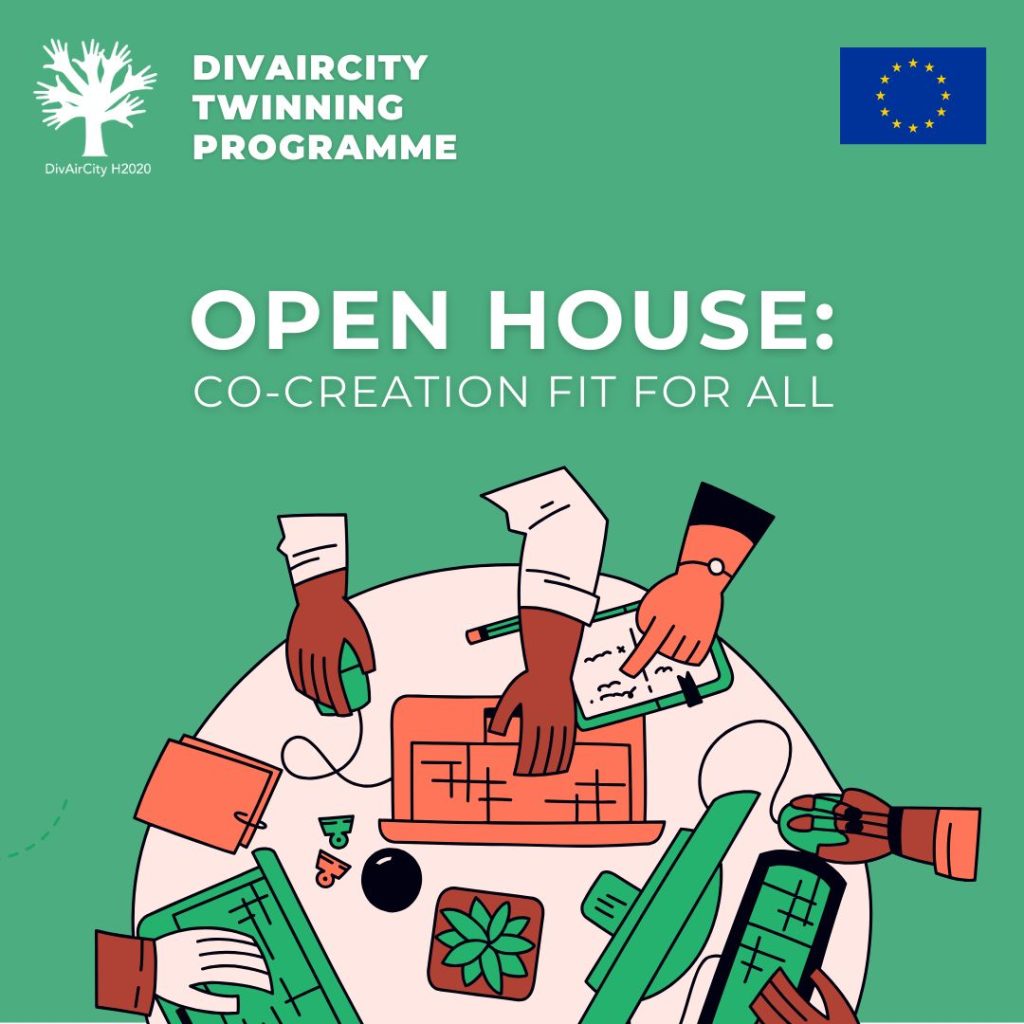
The second Open House under the DivAirCity Twinning Programme, held on the 29th of November 2024, focused on “Inclusive citizen engagement and co-creation practices” a topic arising from discussions during the Orvieto opening event. Hosted by UniverCities, the session offered an interactive platform for addressing barriers to participation, particularly for vulnerable groups. Through a mix of presentations and open discussions, participants delved into innovative tools and frameworks for urban solutions, creating a horizontal space for city officials and partners to exchange experiences, ideas, and challenges collaboratively.
Main points of discussion:
-
Barriers to Participation: Challenges faced by vulnerable groups were identified, including issues related to accessibility, awareness, and sustained engagement. Reaching citizens in their own spaces, rather than relying solely on formal settings, was emphasized as a critical approach. Participants also highlighted how digital divides and socio-economic inequalities further limit accessibility, particularly in underserved communities.
-
Success Stories: Participatory budgeting programs from cities like Klaipeda demonstrated the transformative potential of citizen-driven urban projects. Creative solutions, such as the Sharing Wall in Orvieto, showcased the effectiveness of emotional mapping and gamification in fostering inclusive co-creation. Case studies from cities like Manchester further illustrated how grassroots-led initiatives can bridge gaps between citizens and public authorities.
-
Innovative Tools and Frameworks: The DivAirCity Co-Creation Framework was introduced, featuring methodologies like the Double Diamond Model, which emphasizes iterative engagement with citizens throughout project development. Emotional and observational mapping tools were shared to better capture citizens’ needs and tailor engagement strategies. Participants also explored the potential of virtual consultations and digital platforms to reach underrepresented groups more effectively.
-
The Diversity & Inclusion Green City Contest, developed within the DivAirCity framework, was introduced. The contest empowers young citizens to propose creative urban solutions, with outputs such as Minecraft models and video presentations demonstrating the potential of youth-led innovation. Discussions also emphasized the role of schools and educational institutions in embedding co-creation practices into curricula as a means of fostering long-term civic engagement. Twin cities were encouraged to replicate the contest to inspire creativity and engagement within their own communities. Mentoring support and toolkits are available to cities interested in implementing the initiative.
Main Lessons Learnt:
-
Event Timing: Friday afternoon sessions posed challenges for engagement, as many global cities observe breaks on that day. To ensure inclusivity, alternative timings should be considered for future events.
-
Preparation: Sharing guiding questions or talking points in advance helped participants prepare more effectively, ensuring meaningful contributions.
-
Community Collaboration: Building partnerships with local grassroots organizations and NGOs was identified as a key factor in reaching hard-to-reach groups. Collaborative approaches, including shared decision-making and capacity-building initiatives, were highlighted as critical to fostering trust and long-term engagement.
