About the city
Aarhus is the second largest city in Denmark situated on the Jutland peninsula’s east coast and in the middle of region with its same name.
Initially founded as a harbour settlement at the mouth of the Aarhus River, it quickly became a trade hub open to the world. It’s charming old town open-air museum called Den Gamle By, is mady up of centuries-old timbered houses. It is a historical city with a Botanical Garden, the ARoS art museum and has an underground Viking Museum exhibiting early local history. As of 2022, it has a population of approximately 350,000 inhabitants.
In the last decades, Aarhus has seen an unprecedented urban transformation with many new institutions, infrastructure projects, city districts and recreational areas. Both the skyline and land use of the inner city is changing, as former industrial sites are being redeveloped into new city districts and neighbourhoods.
Aarhus is a city others can learn from
Aarhus is a medium city representing the northern part of Europe. The city aims to be climate neutral by 2030 and has planned investments of 14 million euro in climate funding to reduce CO2. The Municipality has also established a “Board of Citizenship and Diversity”. In addition, Aarhus has been selected to be a mentor city in the Intelligent City Challenge. Aarhus is a member city of the Covenant of Mayors and Rainbow Cities Network.
As a pilot city in DivAirCity, the
the goals for Aarhus Municipality:
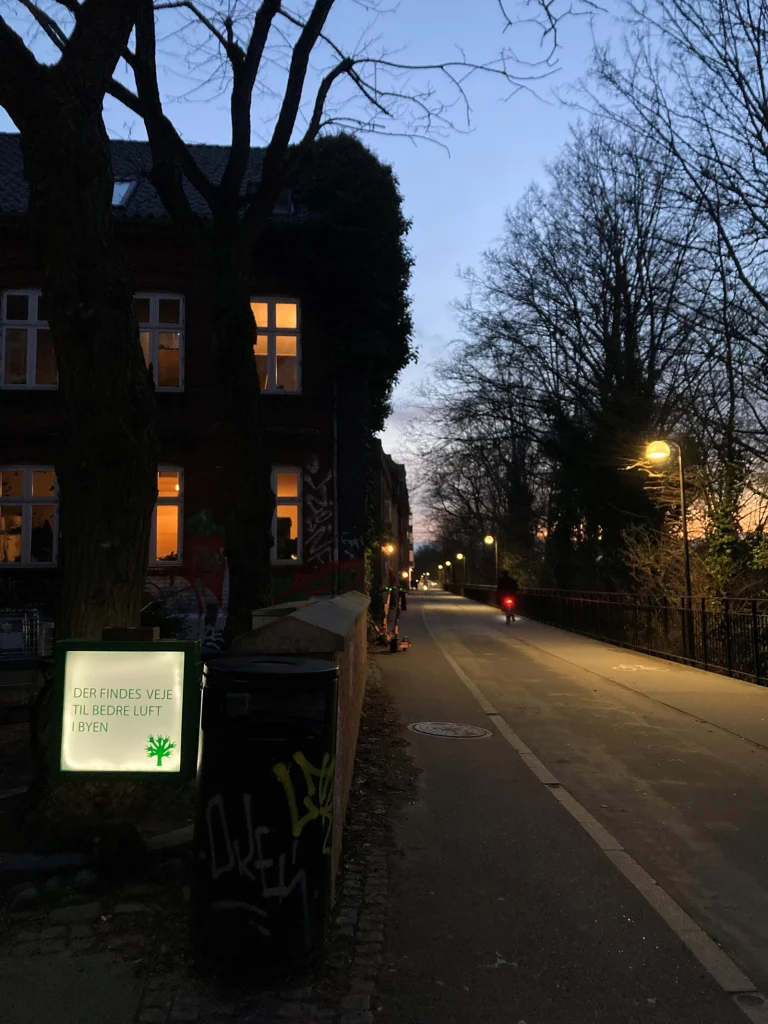
Pointing the way to better air
Raise awareness of air quality among different groups of citizens
Co-creating green urban spaces
Establish city labs
The urban labs in Aarhus focus on the impact of nature-based solutions on well-being and health, and on new approaches and methods for measuring air quality to understand different groups of citizens’ exposure to poor quality air.
Urban labs at Langenæs and Frederiksberg
Langenæs and Frederiksberg is a diverse neighbourhood, where different ways of living lead to differences in how citizens are exposed to poorer quality air. Therefore, many different types of actors are involved in the urban labs. However, common to many of them and to the neighbourhood is that experimenting with green solutions for a better city is not new
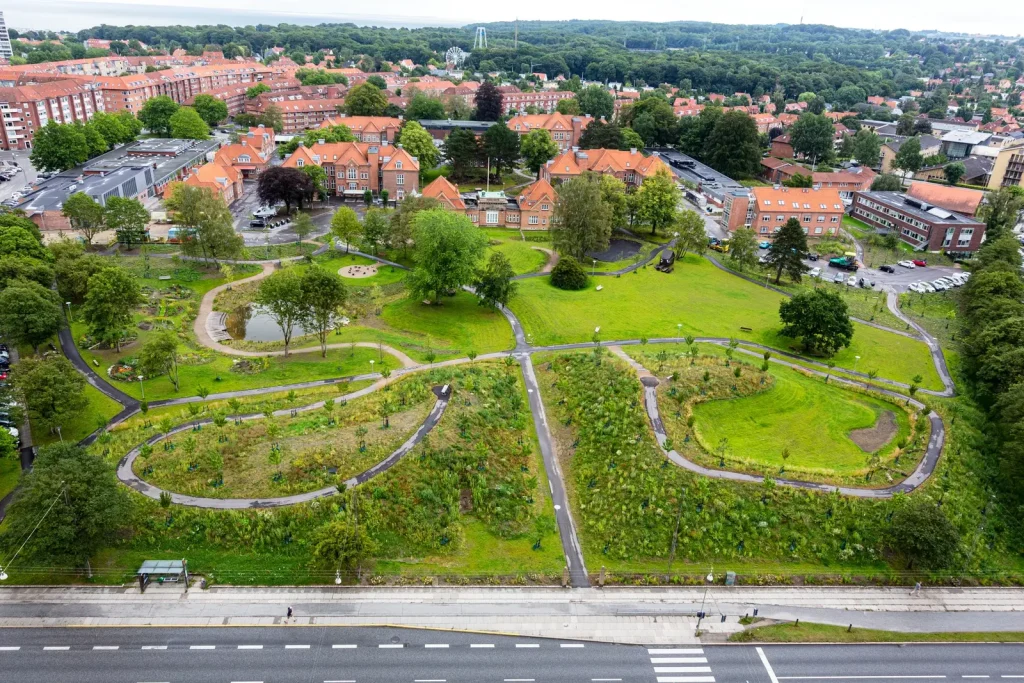
In the local communities Frederiksbjerg and Langenæs, Nature Based Solutions have for years been implemented and used as a method to improve life in the neighborhood. The public park by the MarselisborgCenter re-opened in 2021 after two years of reconstruction from former hospital-park and is the first in the world to integrate urban nature, climate change adaptation and rehabilitation.
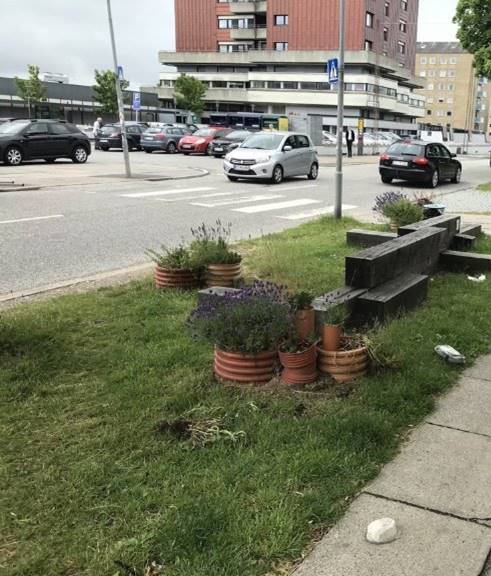
Local involvement is welcome when it comes to adding urban furniture and installations to green areas – even the small green areas.
Can we shut off poorer quality air?
If you regularly pass Harald Jensens Plads, you may have noticed (on the hill west of Sdr. Ringgade) that a screen of star jasmine and ivy is growing up. The screen was built in the spring of 2024 based on an idea and design with the help of local ‘green‛ enthusiasts. It is 24 metres long and 2 metres high. We planted the screen with ivy and star jasmine and surrounded it with stonecrops because these species are particularly effective at cleaning the air compared to many other plants. The screen is currently surrounded by sensors that measure the differences in air quality on the outside and inside. The goal of this urban lab is to see if a green screen like this can be used to improve air quality for those who are ‘inside’ the screen around the city’s parks and spaces. We’ll know and share the results a little later in 2025. The urban lab around the green screen has involved many different participants. Children from local institutions and students from Frederiksbjerg School, for example, have helped plant the screen.
Can we show a path to better air?
During the winter months of 2023 and 2024, cyclists and wheelchair users took air quality measurements with measuring devices mounted on their bodies and vehicles. The background to this was a scientific attempt to answer a question that many citizens have asked themselves and us over the past few years of the project: does it make a difference to cycle, walk or use a wheelchair on alternative streets with less traffic rather than on larger streets with more traffic?
The answer is both yes and no.
No, wheelchair users could not measure a noticeable positive or negative difference in the air content of the particularly harmful ultrafine particles (PM2.5) between the busy streets and the less busy streets. Nor could the measurements show that wheelchair users are exposed to higher concentrations of these particles than pedestrians, even though they are ‘sitting down’ at a height where they appear more exposed to traffic particle emissions.
Yes, cyclists could measure a significant difference of up to 40-50% in particle concentrations between the less busy streets and the busy streets. The measurements were taken on weekdays during rush hour between 07:30 and 08:30 and showed that there are differences for cyclists at least during this time and on a winter day.
Can we draw a cycle route that we can safely say is healthier to cycle along?
No, it doesn’t.
Because there are so many variations in air quality throughout the day and between weekdays and weekends that a fixed cycle route makes no sense. Outside of rush hour, the air on busy streets can be just as similar as on streets with less traffic.
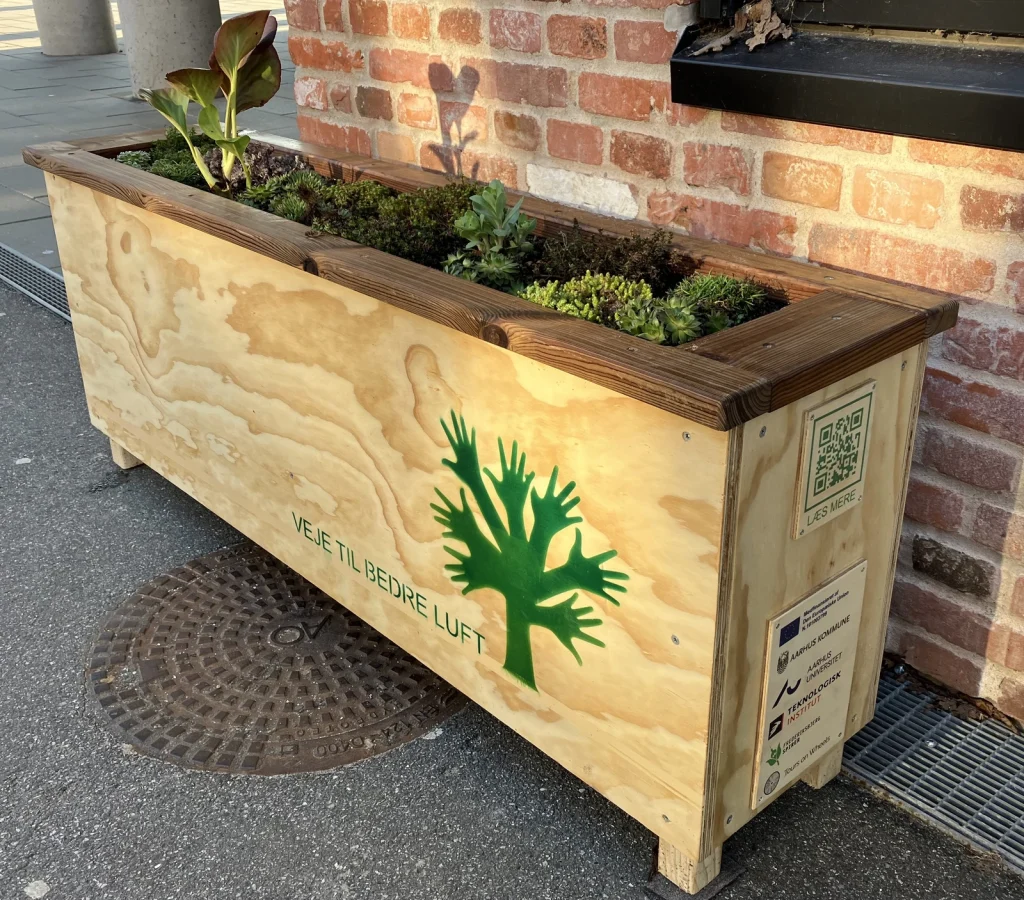
Following advice on ways to improve air quality in everyday life requires first and foremost an awareness of air quality. With the idea and help of various citizens, we are now trying to raise awareness with this urban lab, where we investigate whether physical information stands in the form of boxes planted with stone herbs that provide access to information about air quality via QR codes can raise your awareness so that you can make active choices about your behaviour and exposure to air pollution.
You can find 20 planter boxes in the Frederiksbjerg neighbourhood, and you can find them on Ingerslev Torv, in front of Frederiksbjerg School, in Sankt Anna Gade, in Montanagade, in Dybbølgade and on Hallsti. Each box draws attention to the fact that we all have opportunities to choose a path through the city to reduce our own exposure to air pollution.
The reason why the boxes are planted with stonecrops in particular is because of:
- Stone herbs do not require artificial watering and the boxes are designed to collect the small amounts of water the plants need. Stonecrops can also tolerate drying out. We are evaluating the design with a view to reusing the solution in other contexts.
- The plants belong to a group of plants we could call ‘air purifying’ plants. They clean the air of particles that we don’t breathe in. 20 boxes of these plants won’t make any difference to the overall picture, but imagine what planting on the light rail lines, in all the city’s green spaces, on roofs, in parks and gardens could do? It remains to be seen, but for now, we’d like to inspire you to think of even more places to put air purifying plants in the ground – even in your own home.
- Stone herbs are evergreen and can therefore beautify an urban space all year round.


